Summary
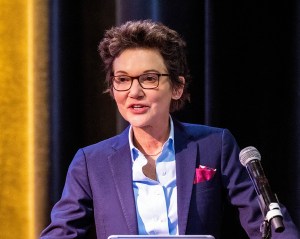
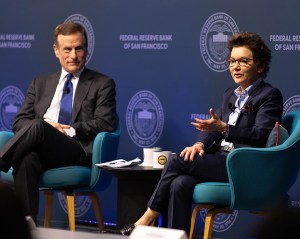
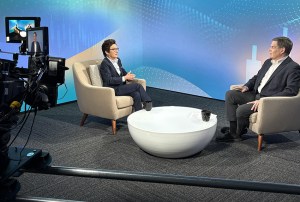
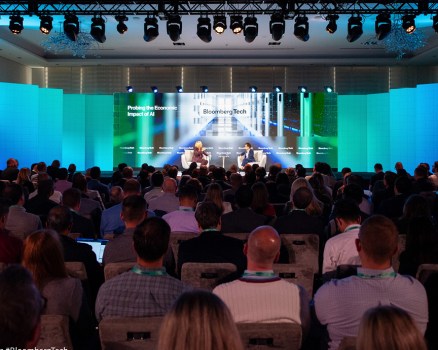
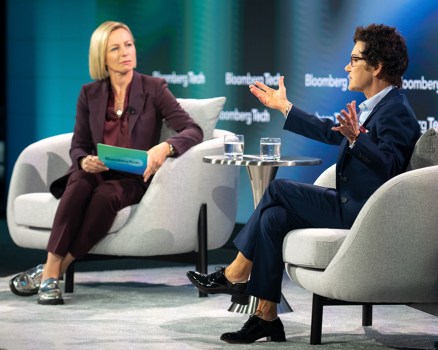
Mary C. Daly, president and CEO of the Federal Reserve Bank of San Francisco, participated in a session, “Probing the Economic Impact of AI” at the 2026 Bloomberg Technology Summit. The conversation was moderated by Bloomberg Television’s Caroline Hyde.
Transcript
The following transcript has been edited lightly for clarity.
Caroline Hyde:
Oh, I’m so excited for this conversation. I’ve upped my suit game because I’m alongside the one and only Mary Daly. And I, following straight on from Daniela, it is so fascinating to see how she’s thinking about already whether there’s data showing the labor force displacement. She talked about it being overseas. She really talked about how we’re thinking of purpose. So I give you the two choices: a choice of abundance and utopia, or one of existential crisis and risk. Where does Mary Daly, or where does the San Francisco Fed sit on, on where the economy is? Utopia or demise through AI?
Mary C. Daly:
Well, like most things in the world, neither of the extremes are usually useful as good descriptors of where we’re likely to end up. So I think, ultimately, the future that we create is our decision. Technology doesn’t make choices. It’s a tool. And is a powerful tool, but we need to make the choice of where we want to be. And I think they touched on it in the last panel. Daniela talked about that, about how, you know, you have to think about, what do you want this to do for you, and what do you want a life that comes from it? And that’s where we are. So I’m enthusiastic about what the models and tools can do, but I do believe strongly that we all need to appreciate what we need to do with it, and now we need to help everyone come along. Otherwise, the world of, you know, the doomsayers versus the enthusiasts gets determined by things outside of us, and really we want to harness it. I always tell people, you know, technology can harness you or you can harness technology. I think we should be in the driver’s seat and not the passenger seat here.
Caroline Hyde:
So when you’re thinking about the driver’s seat of how, can you get the closest data, whether it be macro, whether it be anecdotal? So what is actually happening? How people are harnessing it or not? Where are you turning to?
Mary C. Daly:
I’m really turning to businesses and asking them, what are you doing? And not the technology businesses, the businesses that are going to determine whether this is as transformative as many think it will be, or whether it’s just a cost effective play that makes you better at doing their past jobs, but you’re not going to be creating new opportunities. And I’m already seeing very clear signs that businesses are asking, not the question of how can they use it to simply do things faster, better, cheaper? But how can I do things differently? What did I never think I could do in my business that now I have the capacity to consider? And one of the CEOs we talked to said, we thought we were going to be thinking about costs, and now we’re thinking about revenue. And I said, well, tell me more of what that means. He said, we thought we were a business that did this. And now we know we can be a business that does this. And we can bring, you know, our design. don’t have to go and get designs to do our machine tooling. We can build our designs because we can use model assisted work, and we can change how we think about agriculture, to make it have better yields and less disease, and importantly, bring prices down for consumers, should all of that come through. So it’s one of these things where I see people tackling the technology that they thought they needed to learn to keep up. And now they’re thinking about how do I use it to grow? That’s what we do.
Caroline Hyde:
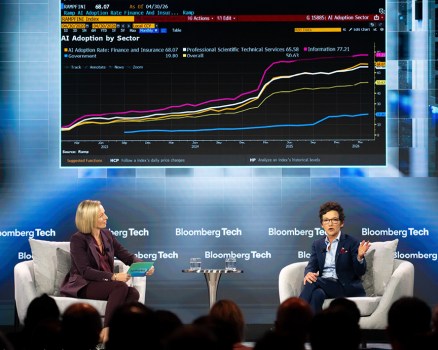
I just want to bring that chart back again, because I don’t know if the audience, and this is where Mary Daly is so fascinating because she reads the data. She also wants to hear from you, so please send us your audience’s. I want questions. I want to be seeing them and integrating them with our conversation. But look at this, the adoption rate that we’ve seen by sector. Of course, information, IT is out front, the professional services. Look at poor old government. But I’m sure in many ways, that’s because you’re restricted. There is there are governance more in place on government use and adoption. How is that the San Francisco Fed using AI in these tools?
Mary C. Daly:
You know, the Federal Reserve, it’s taken a system approach because we are part of a Federal Reserve system. And so we’ve really worked hard all the way back when ChatGPT first came out, you know, the first thing we have to do is say, you’re not allowed to use these technologies to do your work because we’re in a confidential environment and we have ring fences. I know all the private sector companies started thinking about that. But then we quickly realized that it’s an important tool. For the whole time I’ve worked at the Fed, which is longer than I now talk about anymore, but it really, my whole career, it’s really been about being not the first out there taking risks, but the next out there being thoughtful about how technologies could be used elsewhere, because we have to study the economy, we have to know how financial institutions could use them. But we’re also, you know, really committed to being good fiduciary stewards of public funds. So we want to be using technologies that can make work more efficient, more effective, more resilient. But we’re recognizing constantly, even though you’re right, we are regulated, but we’re also self regulating in this way. We are fiduciary stewards of public funds, but also fiduciary stewards of public trust. So we’re always balancing, how do we continue to modernize while we’re making sure we’re safe and we’re sound and we’re doing our work, well, with a human in the loop. That’s what we always think about. Humans gotta be in the loop.
Caroline Hyde:
Well, then for us humans, who are wondering how we bring it more into our personal life, into our professional life, But how we bring others along, what are you seeing in adoption rates within those that you work with, not just those that you’re going out and talking to? How are you seeing your own colleagues feeling empowered to use it or feeling totally distrustful of it?
Mary C. Daly:
You know, well, we’ve been on this journey for a while, we, you know, all the way back, starting in 2023 and thinking about this in San Francisco. You know, we were, we’ve got lots of ambassadors for this, but on any growth curve or maturity curve, there are the early adopters, the enthusiasts. I’m probably one of those. I’m using all the models I can get on my private device thinking about how I can do practice. You know, can I run my equations that I’ve written down much faster? Can I estimate models better? Can they code faster, all of this type of thing? But the important thing is, we quickly built a sandbox in the Fed, where we can do these things safely, and people can practice. Well, that means that it’s not just the leaders who are using it and saying, you must use it, or you should use it. It’s actually ground up as well. And so there’s the enthusiast, the early adopters, and then you bring the others along. And I would say that we have, and I feel proud of this at the system level. We have taken this as, it’s the individual’s responsibility to invest in him or herself, but it’s also the organization’s responsibility to make sure we’re training, the workplace that’s ready for tomorrow, not just the workplace that’s ready for yesterday. And so, thinking about how we enterprise train people on these tools in a safe and sound way, making good judgments. you know, you don’t need, um, generative AI for every single task. We’ve long been using machine learning, robotic process automation. You can use older, uh, technologies, like those, which seemed new and cool before. You can use those older technologies to do well. I think it’s just a matter of helping people in our organization. We’ve got widespread adoption at this point. Helping people understand that when you get down to it, it’s not just about learning a tool, it’s about seeing how it can benefit you. And one of the ways we think that we can change business processes is have people who are actually in the work, innovate within that space, but do it in a safe and sound way by having a group of people take a look at that and say, Do we want to take this to scale across the enterprise? Or is this just a one off thing that was nice to experiment, but it’s not gonna give ROI?
Caroline Hyde:
Well, ROI is so front and center, has been for the last couple of years, and still, we’re waiting for that tangible data that shows that productivity is really at an inflection point. And from your perspective, is it about the reskilling, the training, from a government perspective, a public perspective, a private, me, as an individual perspective, that’s holding us back? Why haven’t we seen it in the data?
Mary C. Daly:
Well, the very first thing to know is that there’s, you know, this famous phrase that you, productivity growth is everywhere, except in the data. The data itself, at the aggregate level, that we collect, that’s a true thing that was said by Robert Solow, you know, it’s like, this is important because it always happens, where the productivity growth is starting to take place, the productivity gains. But in order for that to get to the aggregate level, it has to be across a wide group of individuals and firms. So we are seeing evidence in particular firms, in particular sectors, where you’re already seeing those gains. But we haven’t seen it at scale yet, in part, because if you think back to, I’m going to use an extra historical example, they’re not perfect guides, but I think it’s useful. Think of electrification. We had electricity for a long time before we got the rapid productivity growth that came from electrification. The change wasn’t that we knew how to use electricity. We had that. The change was that instead of just putting the electric motor at the end of a factory line that was once powered by steam, where you saved costs for energy, but the line looks identical. The unit drive came in, and they could make machines with specific motors for themselves, and they could rearrange the factory anytime they wanted. And then transformative things happen. What’s the key? It’s business process change that generates sustained productivity gains, and firms are just at the early stages of interrogating, learning the technology, using the technology, and then thinking, How do I change my business so it doesn’t actually look the way it once did? For that, you need workforce, you need investment, you need learning. And then, of course, as Daniela mentioned, the models are changing so quickly. The capabilities that most of the firms we talk to don’t want to just take one thing and say that’s our new, because they know six months, one week from now, things could be totally different.
Caroline Hyde:
I mean, what hasn’t changed, and has been relentless for a couple of years, has just been the wall of money coming into the AI picks and shovels, the infrastructure buildout. Is that showing up in an inflationary pressure perspective? We keep talking about bottlenecks, about memory prices. How is that affecting from a macro perspective?
Mary C. Daly:
So we haven’t seen those particular things. Certainly that’s a concern. If you go to particular places where data centers are being built, you can get information about how it’s harder to get construction workers because they’re all being moved there, or there’s a demand for construction workers that might outstrip. But for the construction workers, it’s a boom, right? This is a good thing. And, of course, we need more pipe fitters and welders and all the things that we thought for a long time we didn’t need. Now we know we do need them. And community colleges, in particular, are training a lot more people to do those types of jobs. But we haven’t seen that drive the inflation numbers, that everyone’s worried about. You know, the number one concern, when we talked to people in communities, you can see it in the Gallup surveys, et cetera, is inflation. But inflation’s really being driven by just the ongoing—we’re trying to get inflation down to 2%, of course, but then we have the tariffs, and those are rolling through, and hopefully rolling off. You know, the effects of the tariffs rolling through and rolling off by the end of the year, but then we have the oil prices, which are pushing up overall energy costs, and, of course, food prices as well. So those are the things people seem much more worried about than the data centers. It certainly has caused some supply gaps between the things that power electric plants, the chips, et cetera. But I don’t think that’s really the main driver in any way of inflation right now.
Caroline Hyde:
But, of course, your mandate remains steady prices, it remains financial stability, and we’ve got a great audience question here saying, you know, how do you think in the longer term, AI will infect your mandate?
Mary C. Daly:
You know, I don’t, I don’t think of it as affecting our mandates. Our mandates are given to us by Congress. And so, let me just say they’re full employment and price stability. And those are always affected by how the economy grows, how fast it can grow, what the underlying aspects of it. And so, what many people are wondering right now in that particular mandated goals is, in the next year, will AI itself affect our specific decisions that we’re making as we navigate this. And I say, you always are thinking about what the potential of the economy is, but we also, if you’re a policymaker, you have to think about, what’s really happening today, and there it’s oil prices and other things. And then there could be this idea that maybe the job market won’t be as robust as it’s been in the past, because AI will do so much. So far, we have seen mostly AI, generative AI, being used to augment workforce rather than replace workforce. Now, it is absolutely true that if you’re going to take, if coding is easier, you won’t need as many coders. But where we’re hearing from firms that use coders is they’re hiring new coders, new types of coders. So net hiring’s going up, or hasn’t fallen very much, it’s just the people’s, the skills you need are different. And so the responsibility for all of us is to think, how do we provide training for people so that we, and it’s not gonna be, like, any one component, you’re gonna have to have individuals saying, I want to invest in myself and learn these new skills. Companies saying, well, how do we mobilize our workforce by providing training? And the public sector asking, what do we need for our nation? And I think those three things together, individual, private, and public, together, thinking about, what’s our journey forward as we make sure this workforce is ready? And that anyone who used to do this job and now has to do these kinds of things, can prepare themselves to do those.
Caroline Hyde:
Dare I push us into the five, ten year landscape, and what we’re hearing from your new Fed chair, Mr. Warsh, is that maybe it could be deflationary.
Mary C. Daly:
It could be, absolutely.
Caroline Hyde:
Are you abiding by that? you think?
Mary C. Daly:
Yeah, you know, one of the things that’s true about technology is when you invest in them, they, you know, that can, the investment comes first, right? You have to invest in the capital, the infrastructure, the technology itself, and then you invest in the people so that they’re ready. And investments often compete for resources.
Caroline Hyde:
Yeah.
Mary C. Daly:
That is the early part. And the next stage is, where do you get to start to get the gains? But if it is as transformative as some of the other technologies have been that we call transformative in our history, then you absolutely start seeing productivity gains, and that means the pie grows faster, and we can, things can fall in value, and fall in prices, and inflation can, it can be deflationary. And the timing is really what matters. So, you know, you talked about the 5 and 10 year landscape. We’re talking about the, you know, 12 month landscape, when we’re thinking about policy decisions, we have to think about today. And then we’re thinking about the 5 and 10 of where we’re headed, and you go back to the periods in history where the Fed has had to grapple with these technological changes. I started at the Fed in the mid ’90s when we were grappling with how much could computerization, the Internet, could create opportunities to hold prices back. And so those are the kinds of things that we are doing right now, but I don’t think that’s the pressing issue today. Today, you know, inflation’s above target for different reasons, but going forward, we definitely have to think about this.
Caroline Hyde:
In the news, unfortunately, we’re thinking about the next day or the next week, this time next week, we know that SpaceX is gonna be pricing. We’ve got a wall of, like, money desperately trying to come into these public companies. We’ve got assets at near record highs, if not at them. Is that ever a cause for concern for you or the fan?
Mary C. Daly:
You know what? We certainly, the Federal Reserve system, you know, you can see that we release twice a year, our quantitative surveillance kind of summary. But essentially, we’re always watching financial stability issues, but we are asking these questions. This is a question I ask. What is the value of the work being done behind that? And I think it’s really hard to trace back and say that the technologies that people are investing in aren’t valuable. We see them in your personal life. I’m sure all of you, if you’re in a tech conference, are using AI, you know, for your personal life, and your business, et cetera, just thinking about it. And the more you use it, and this rate of change, you see it making, the more you recognize there’s a possibility. So I think there’s there there, right? Will there, is there potentially some, you know, changes?
Caroline Hyde:
Bubble?
Mary C. Daly:
I do not use… There’s two words I don’t use. I am not saying them, but one of them is that word.
Caroline Hyde:
What’s the other?
Mary C. Daly:
The other one… It starts with an R. And so, but seriously, we don’t talk about these things. Now, in all seriousness, I think, I think that it’s, you know, look, think about the conversations we’re having, and a lot of times you see, you hear conversations about AI is gonna save everything. Nothing else will ever be bad again, because we have AI. And on the other side of it, you hear AI can destroy everything. You also hear that, Oh, my gosh, it’s a B word. Oh, my gosh, it could cause this word. Nobody will work. And I just would caution all of us from staying at these extremes, because the hard work, the work that is going to determine what our future looks like with this technology, is all in the middle. It has nowhere in their extremes. It’s about thinking, okay, we use this, and these people don’t do these jobs anymore. What do they do? And if you look back on history, and you wonder, why did technologies have a negative outcome on society when, over time, they had a positive outcome, electrification? It’s often because the people who were being displaced didn’t have an opportunity to grab another rung. And I think it’s really incumbent on all of us to think, how do you enable opportunities so people can grab another rung? And how do you harness the technology so it can do work that we haven’t been able to do, we’re thinking, we haven’t been able to do, you know? And every week, you open the news and you see another thing that AI has done for us, that has made our lives potentially better. So let’s not lose sight of that. While we also doing aside what has to be done by all of us in order to make sure this is a positive rather than a negative experience?
From the Event
Sign up for notifications on Mary C. Daly’s speeches, remarks, and fireside chats.
About the Speaker
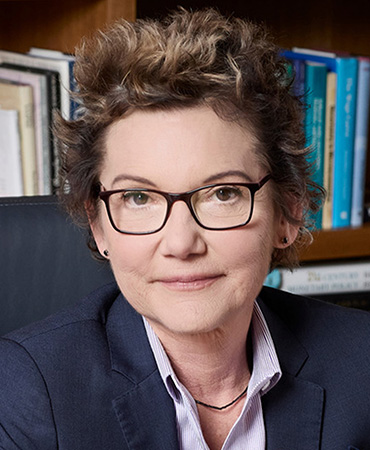
Mary C. Daly is President and Chief Executive Officer of the Federal Reserve Bank of San Francisco. In that capacity, she serves the Twelfth Federal Reserve District in setting monetary policy. Prior to that, she was the executive vice president and director of research at the San Francisco Fed, which she joined in 1996. Read Mary C. Daly’s full bio.
Related: